Camping Activities for Kids That Teach Science and Nature
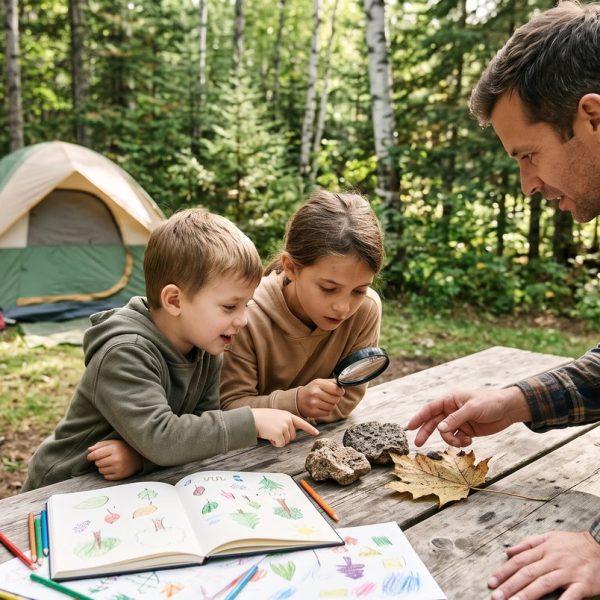
A campsite is one of the best classrooms a child can have. The rocks under the tent tell the story of how the land was made. The trees, bugs and birds show how living things depend on each other. At night, the sky opens up in a way most children never see in the city. With a few simple activities, a family camping trip can spark a lifelong love of science and nature.
Here are hands-on camping activities that teach kids about the Earth, its past and how we can protect its future, all without feeling like homework.
1. Become Rock Detectives
Rocks are clues to Earth's history. Give kids a small bag and ask them to collect five different rocks near camp, if the rules allow it, or to photograph them if collecting is not allowed. Back at the picnic table, sort them by color, weight and texture. Are some smooth and rounded? Those may have been shaped by water. Do some have layers? Those may have formed slowly over long periods of time.
Keep the activity simple: the goal is to notice and ask questions, not to name every rock correctly. Return the rocks where you found them before you leave.
2. Hunt for Signs of the Past
In some areas, especially near cliffs, beaches and riverbanks, kids may spot shells, leaf prints or other fossils in the stone. Even if you do not find one, talking about how fossils form, as living things buried and slowly turned to stone, helps kids imagine how old the landscape really is. Many park visitor centers have displays of local fossils that make a great rainy-day stop.
3. Start a Nature Journal
Give each child a notebook and colored pencils. Each day, they draw one thing they found: a leaf, a beetle, a mushroom, a bird's feather. Ask them to write down where they found it, the weather and one question it makes them wonder about. This simple habit is how real naturalists have worked for centuries, and it trains kids to look closely.
Journals also make great souvenirs. A family-friendly Times Bay guide to camping activities for kids suggests the same idea: having each child record the trip and keep a small souvenir turns a weekend into a lasting memory.
4. Be a Weather Watcher
Camping makes weather real. Kids notice when the wind picks up, when the clouds turn gray and when the air feels damp before rain. Make a simple weather chart for the trip with columns for morning, afternoon and evening. Record the temperature with a cheap thermometer, sketch the clouds and guess what will happen next. Talk about how weather is changing in many places and why some summers feel hotter than they used to.
5. Explore the Night Sky
Away from city lights, the stars appear by the thousands. Stargazing, or amateur astronomy, needs nothing more than a blanket and patience. Let your eyes adjust to the dark for 15 minutes, using a red light if you need to see. Look for:
- The Big Dipper and the North Star
- The bright band of the Milky Way on clear, dark nights
- Planets, which shine steadily instead of twinkling
- Satellites, which move slowly and steadily across the sky
- Shooting stars, especially during meteor showers
A free star chart app or a printed map helps kids find constellations and learn the stories behind their names.
6. Build a Mini Food Web
Ask kids to find as many living things as they can in a small area, such as a square marked with sticks. Then connect them: the leaf feeds the caterpillar, the caterpillar feeds the bird, the fallen leaves feed the soil. Drawing these connections shows children how every living thing has a role, and why removing one piece can affect many others.
7. Join a Citizen Science Project
In citizen science, ordinary people help real scientists by collecting observations. Families can photograph plants, birds or insects with free apps and upload them, helping researchers track where species live and how they are changing. Kids love knowing that their photos might help a real study.
8. Draw a Sound Map
Ask everyone to sit quietly for five minutes with eyes closed. Each time they hear a sound, they mark it on a piece of paper with a small symbol in the direction it came from: a bird song, the wind in the trees, water running, a distant car. Compare maps afterward. Kids are often amazed at how many sounds they missed, and it is a calm way to end an active afternoon.
9. Leave It Better Than You Found It
Finish every trip with a five-minute cleanup game: everyone picks up any trash around the campsite, even if it is not theirs. Talk about why we stay on trails, keep wildlife wild and never feed animals. These small actions show children that protecting the Earth's future starts with what we do in one small place.
Tips for Keeping It Fun
- Follow your child's curiosity instead of a strict plan.
- Keep each activity short, around 15 to 30 minutes.
- Bring a magnifying glass, binoculars and a small flashlight.
- Answer "I don't know, let's find out" when you are unsure.
- Celebrate questions as much as answers.
A Campsite Full of Discoveries
Science does not have to live in a textbook. On a camping trip, kids can hold a fossil, chart a storm, follow a beetle and spot a planet, all in a single weekend. Pack a notebook, a magnifying glass and a sense of wonder, and let the Earth itself do the teaching.